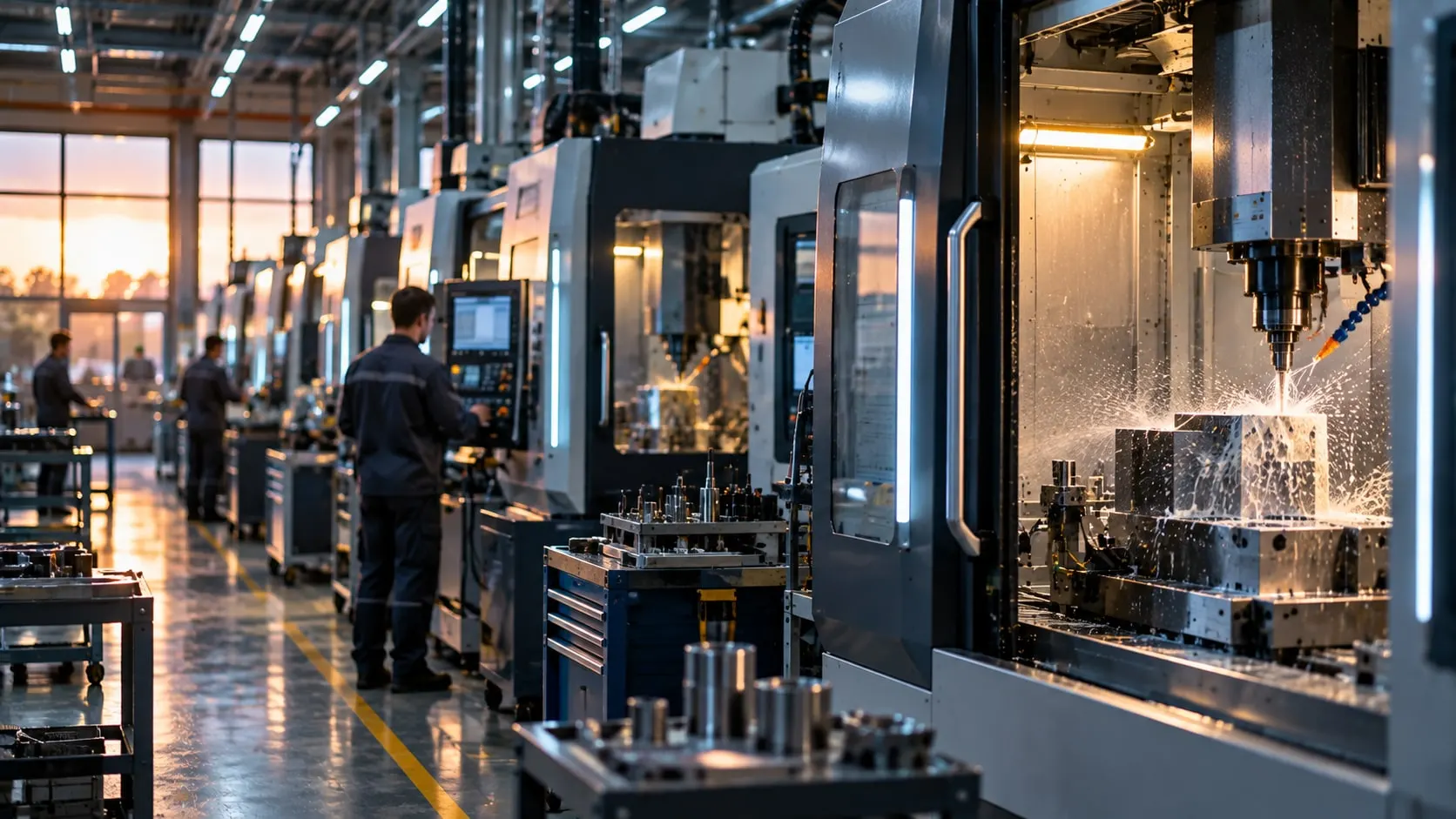
Technology
Heidenhain CNC data collection: LSV2 on TNC controls
We read data from your Heidenhain-controlled mills and machining centers over LSV2 and connect it to production tracking and maintenance screens.
Our clients
- Siemens

- Anadolu Isuzu

- BSH
- Tofaş

- Toyotetsu

- Martur

- Turkcell

- Vodafone

- Doğadan

- Pakmaya

- Bross
- Abdi İbrahim
- Nobel İlaç

- Plastimak

- Dalgıç Kalıp

- Barbaros Motor

- Magneti Marelli

- Rözmaş

- Sanel

Heidenhain CNC data collection means reading the run state, active program and alarms of TNC controls over Ethernet with the LSV2 protocol. Heidenhain-controlled machines are common in mold shops and precision machining.
LSV2 access depends on the control's network settings and access permissions. We check these with the machine owner during the survey and do not touch part programs or machine parameters.
Machine data alone is not enough. On Proxus we combine it with work order, operator and shift information so machining times and stops become visible per mold and per part.
What we deliver
Heidenhain CNC data collection
-
Reading over LSV2
We connect to TNC controls over Ethernet with LSV2, default port 19000. Compatibility is confirmed per control model and version during the survey.
-
State and program
Run state, active program and mode are read, and downtime and OEE figures are derived from them.
-
Alarms
Alarms on the control are logged with timestamps and tracked per machine on maintenance screens.
-
Mold and part context
Machining times are matched to work orders and mold numbers so they can be used for costing and planning.
-
No change to the machine
Reading does not change NC programs or parameters. By default we only read.
How a project runs
From discovery to live, step by step
- 01
Machine inventory
We record TNC models, software versions, Ethernet connections and the IP plan.
- 02
Access check
With the machine owner we check the network and permission settings LSV2 needs.
- 03
Data and context
We decide what to read and how it is matched to work orders, molds and shifts.
- 04
Commissioning
We start reading on a Proxus edge gateway, verify against the machine screen and connect production tracking.
Built on Proxus
Proxus's Heidenhain LSV2 driver runs on the edge gateway. Machine data lands in the same Unified Namespace as Fanuc machines and PLCs in the same shop.
Proxus is the industrial data platform built by the VOLSOFT team.
Frequently asked questions
Common questions
How do you collect data from a Heidenhain machine?
Heidenhain TNC controls are read over Ethernet with the LSV2 protocol. The control's network settings and access permissions must allow it.
What is LSV2?
LSV2 is the protocol Heidenhain controls use to exchange data and files with outside systems. Over Ethernet it uses port 19000 by default.
Can Fanuc and Heidenhain machines be monitored together?
Yes. Each control is read with its own driver and the data is combined in one model with the same state definitions, so OEE and downtime reports do not depend on the control brand.
Do you access part programs?
No, we do not change NC programs or machine parameters. Only the state, program information and alarms needed for monitoring are read.
Related pages
Often looked at together
- Solution Mold Monitoring Automatic shot counts, mold-to-machine tracking and shot-based mold maintenance. Explore →
- Solution Downtime Tracking Automatic stop detection, reason codes, Pareto analysis and MTBF/MTTR reporting. Explore →
- Service MES and OEE Implementation Production tracking with automatic OEE, downtime, work orders and shift reports from machine data. Explore →
- Industry Metal and steel Coil tracking, weighing, downtime and energy data on slitting, CTL and rolling lines. Explore →
- Industry Plastics and injection molding Cycle time, mold changes, scrap and OEE tracking across injection molding machines. Explore →

Next step
Let’s turn your goal into a clear engineering scope.
Tell us about your plant, your machines and your goal. An integration engineer will set up a discovery call with you.