Skip to content

Industry

Machine data and stoppage analysis for knitting, weaving and dyehouses

We collect speed, stoppages and stop reasons from hundreds of knitting and weaving machines and record dyehouse recipes and process values per lot.

  • Siemens
  • Anadolu Isuzu
  • BSH
  • Tofaş
  • Toyotetsu
  • Martur
  • Turkcell
  • Vodafone
  • Doğadan
  • Pakmaya
  • Bross
  • Abdi İbrahim
  • Nobel İlaç
  • Plastimak
  • Dalgıç Kalıp
  • Barbaros Motor
  • Magneti Marelli
  • Rözmaş
  • Sanel

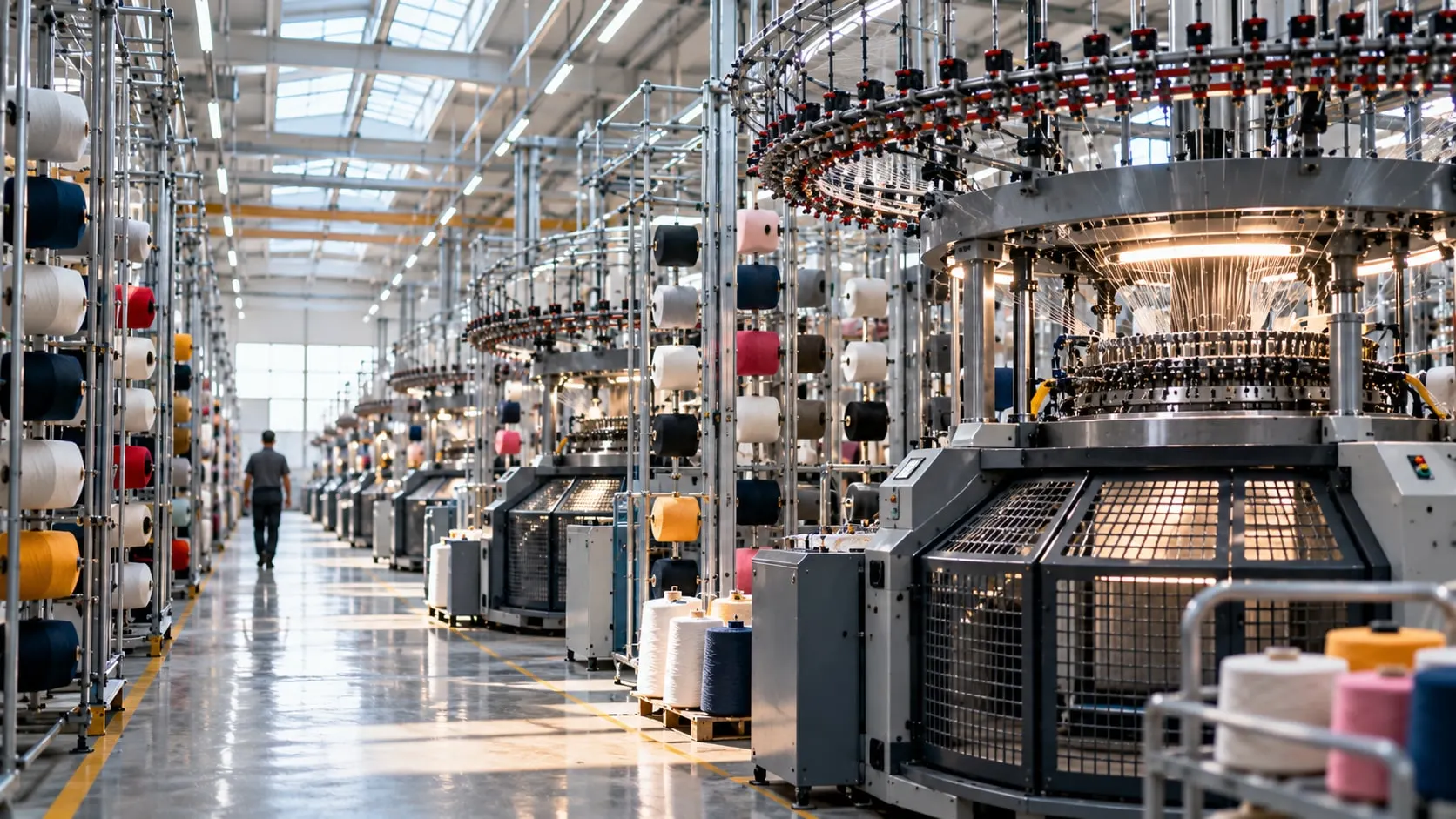
In textiles, losses rarely come from one big breakdown; they come from thousands of short stops: yarn breaks, weft breaks, broken needles, empty bobbins, roll changes. Nobody can log those by hand across a weaving or knitting hall, so all that remains at the end of the shift is a total in meters or kilograms.

VOLSOFT collects speed, pick count, meters and stoppages per machine from the controllers or from run and counter signals, without touching control logic. In the dyehouse, recipe steps, temperature curves and durations from dyeing machines are stored against the lot number.

At Bross, a machine data collection and reporting system was used to analyze production gaps and delays; in their Clutch review the client reported a 15% increase in efficiency. Every project runs on Proxus.


What we deliver

Textile

  • Efficiency and speed per machine

    RPM and rolls on knitting machines, picks and meters on looms are collected per machine. Efficiency is calculated per shift, article and weaver.

  • Stop reasons

    Yarn breaks, weft and warp breaks, broken needles, bobbin and roll changes are classified from machine signals or operator input.

  • Dyehouse recipe and process records

    Recipe steps, temperature curve, liquor ratio and durations from dyeing machines are stored per lot, and re-dyes and shade deviations are tracked with the lot.

  • Stenters and finishing

    Stenter speed, zone temperatures and width settings are matched with the fabric lot.

  • Hall boards and shift reports

    A hall board shows stopped machines and their stop reasons in real time, and the shift report builds itself without manual entry.

Processes we work on

Where the data starts in textile

  • Circular knitting machines
  • Weaving looms (air-jet, rapier)
  • Warping and sizing
  • Yarn twisting and winding
  • Dyeing machines (jet, overflow, package dyeing)
  • Stenters and finishing machines
  • Fabric inspection and rolling
  • Garment sewing lines

How a project runs

From discovery to live, step by step

  1. 01

    Hall and machine inventory

    We list machine brands, controllers, communication options and the network on site, and decide which signals to use on older machines.

  2. 02

    Pilot hall or machine group

    Data collection, stop classification and a hall board go live on one group of machines, and measured efficiency is checked against floor records.

  3. 03

    Dyehouse and finishing

    Process data from dyeing machines and stenters is collected and linked to the lot record.

  4. 04

    ERP integration and training

    Orders, articles and lots are connected to the ERP. Hall supervisors, planning and maintenance are trained.

Built on Proxus

Proxus collects signal and counter data from large numbers of machines at the edge, builds stoppage events and feeds hall boards, reports and the ERP.

Proxus is the industrial data platform built by the VOLSOFT team.

Operations monitoring with Proxus ↗

From the field

One of the clients we work with in this industry

References →
Bross

Machine data and loss analysis in textile production

A machine data collection and reporting system was built to analyse production gaps and delays. The client reported a 15% increase in efficiency.

“Their communication was flawless.”

Furkan Yavuzarslan · General Manager, Bross

Source: the client’s review on Clutch

Frequently asked questions

Common questions

How do you collect data from textile machines?

Textile machine data comes from the controller's communication interface or from run, stop and counter signals. On newer machines, speed, picks and stop reasons can be read directly; on older ones the signals are picked up through an intermediate device. The machine's control logic is not touched.

How is loom and knitting machine efficiency calculated?

Efficiency is actual output as a share of the machine's theoretical speed or pick capacity. When stop durations and reasons are kept separately, you can see whether losses come from yarn breaks, bobbin changes or planning.

What textile project has VOLSOFT delivered?

At Bross, a machine data collection and reporting system was built to analyze production gaps and delays. In their Clutch review the client reported a 15% increase in efficiency.

Can dyehouse recipe data be recorded?

Yes. Recipe steps, temperature curves and durations can be read from dyeing machine controllers and stored with the lot number. That record is used to analyze re-dyes and shade deviations.

How long does a machine monitoring rollout take in a textile mill?

It depends on the number of machines, their communication options and the scope. Projects usually start with one hall or machine group, and the scope is set during the discovery call.

Next step

Let’s turn your goal into a clear engineering scope.

Tell us about your plant, your machines and your goal. An integration engineer will set up a discovery call with you.

Awards and references

The integration team manufacturers trust

See our references →